Showing posts with label forsythia sage. Show all posts

Wednesday, September 21, 2011

As the Season Changes

Blue Ginger
Dichorisandra thyrsiflora

The end of the week heralds the official beginning of Fall.  The garden is beginning to show its Fall colors already.  Since the trimming has gotten away from me, the Blue Ginger is blooming underneath the overpowering branches of Purple Firespike which won't bloom until late winter.

Flowering Maple
Abutilon

Flowering Maple has bloomed pretty much non-stop since Spring, but seems to have more blooms than ever now that the nighttime temperature has dropped a bit.

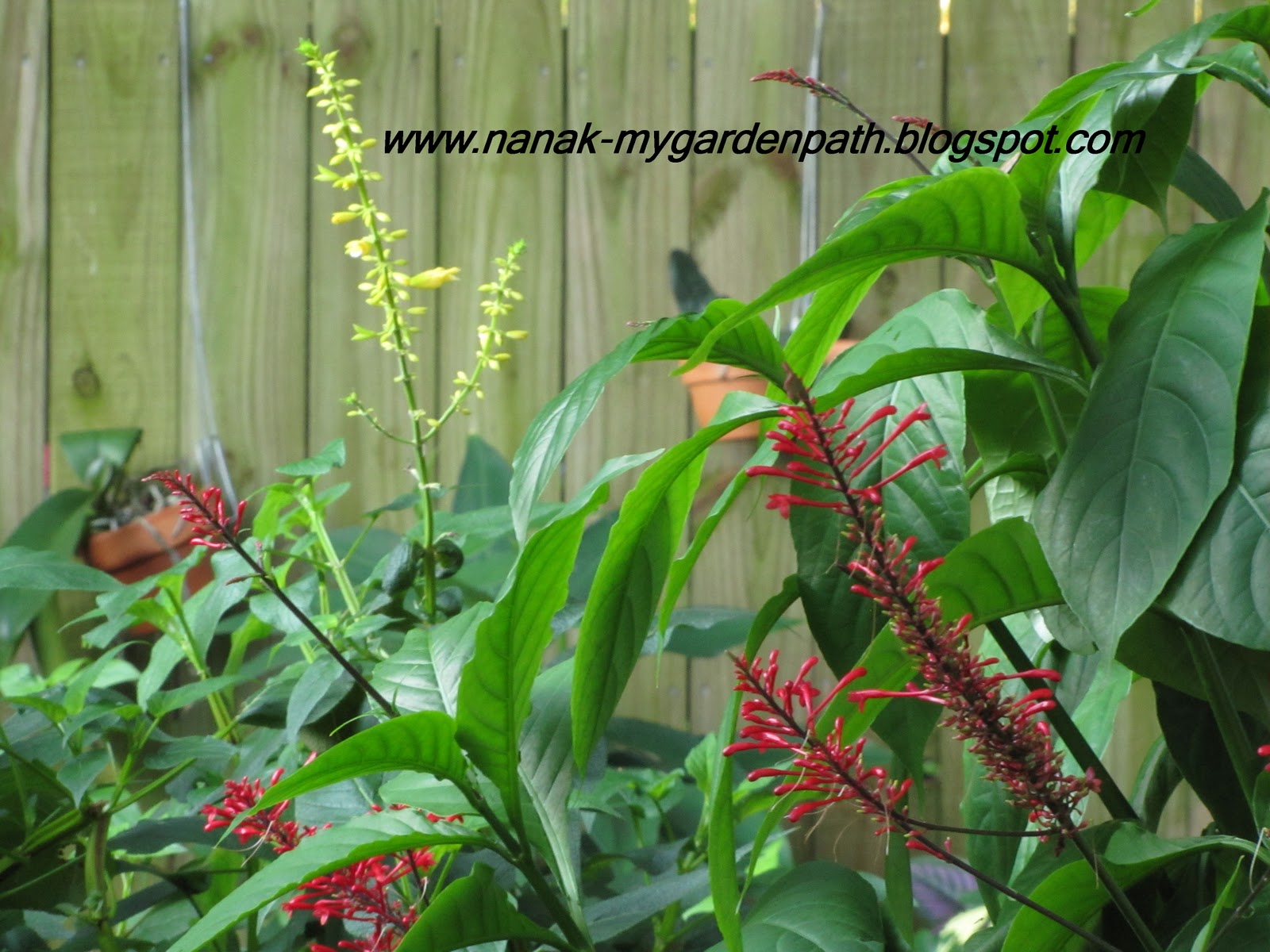
Forsythia Sage, Salvia madrensis and Red Firespike, Odontonema strictum

My favorite Fall flowering combination is this Red Firespike and Forsythia Sage blend.  The butterflies and hummingbirds love these two as well.

I have noticed more buds forming on other Fall blooming plants which are nice to see as many of the Summer bloomers are closing up and fading away.  I love witnessing the changes of season in the garden even though, here in central Florida, those changes are very subtle.

Tuesday, June 21, 2011

A Random Ramble

While checking on the garden this first day of summer,  I discovered that the Florida cannas are blooming.  Solid yellow blooms against the medium green spear shaped leaves are every bit as beautiful as their hybrid counterparts.


Another surprise in yellow is the forsythia sage bloom spike.  This isn't supposed to bloom until fall.  I have several clumps of this sage in other parts of the garden that are behaving normally.  Yet, this one has several budding spikes. I couldn't catch him by camera, but a hummingbird was visiting these flowers.


Staying in the shade for my ramble through the garden, I spotted the flamingo flower blooming.  I've seen these as bushes maybe three feet or so tall in other gardens, but mine seem content to stay only about two feet high.  Eventually they are going to have to grow or I'm going to have to move them in front of the larger persian shield and variegated shefflera.


Back on the porch, I'm happy to report the pencil cactus is putting out lots of new growth where I cut it in half to give the top portion to my daughter.  She has the pretty half.  It'll be interesting to see how mine shapes up in the future.  This is such an unusual plant I think it will just add to the quirkiness to have a little 'jog' in the growth.


The succulent container I planted last summer is getting leggy from stretching toward the eastern sun.  I really must be more diligent in turning it a quarter turn every few days to help it grow more well rounded.


Today is officially the  first day of summer and due to the ensuing heat, gardening will be kept to early morning hours for the next few months.  Any major garden projects will have to wait until fall to be implemented.( I seem to still have quite a few projects left from the list I made for last fall. )  

Monday, November 8, 2010

Yikes! Spikes!


In the fall, the long lasting, spiky blooms of Red Firespike, Odontonema strictum, and Forsythia Sage, Salvia madrensis, tower above the rest of the shade garden.  Their graceful spires beckon all the flying, flitting and buzzing creatures to come sample their nectar. 


Planting the yellow and red blossoms together was purely happenstance.  Next spring more of this combination will be used around the garden.  Both of these plants root easily from cuttings and both are root-hardy in winter. 


The bright yellow blooms of Forsythia Sage show up really well in the shady corner.  But the square-shaped stems are not quite sturdy enough to keep those spikes aloft without being staked.  This plant will root readily where the stems touch the ground and it sends out suckers from the roots.  A small cutting can turn into quite a large clump by the next season after planting.   


When brushed against, the foliage releases a very unpleasant odor.  The scent is reminiscent of fish emulsion fertilizer.  Because of it's height, this is a back of the border plant so it isn't often that anyone other than the gardener would notice the less than delightful fragrance.


The original Red Firespike is planted with Stromanthe sanguinea 'Tricolor'.  This grouping was purposefully planted.  Since the Stromanthe multiplies nicely and makes it through winter with just minor leaf damage, there are plans for moving divisions of it around the garden in the future.  


These red blooms began showing up in August and now, in November new ones are still blossoming.  The yellow blooms made a late showing beginning late October and should persist for six weeks or so. 


These fall flowers add a lot of color to the shady areas of the garden.  Even though freezing temperatures will kill them to the ground, both of these beauties rebound quickly once warm weather returns.  They both have large green leaves that make a good backdrop for spring and summer blooms.  When fall arrives it is their turn to shine and put up the spikes.